
Let's talk about the Alexandra Park Public Art project
Consultation has concluded
The City of Brantford is inviting residents to provide input on three shortlisted proposals for a new public artwork, or a series of artworks, that will honour and celebrate the 150th anniversary of the invention of the telephone. The final commissioned sculpture(s) will be installed in Alexandra Park, located at 265 Dalhousie Street. Please review the three proposals below and provide your feedback through the survey before Monday, January 19, 2026, at 4:30 p.m.
Proposals
AHOY-HOY by Julia Jamrozik and Coryn Kempster
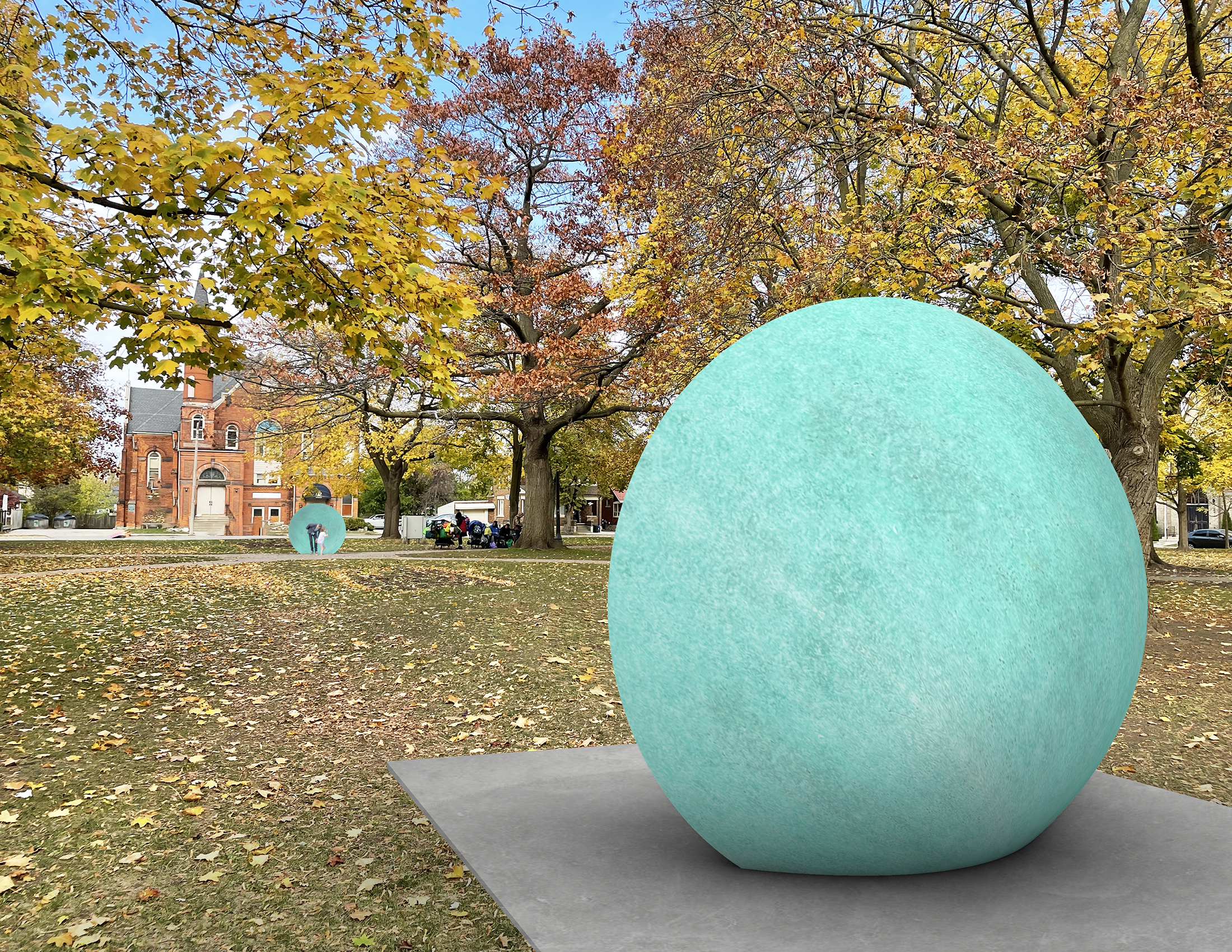
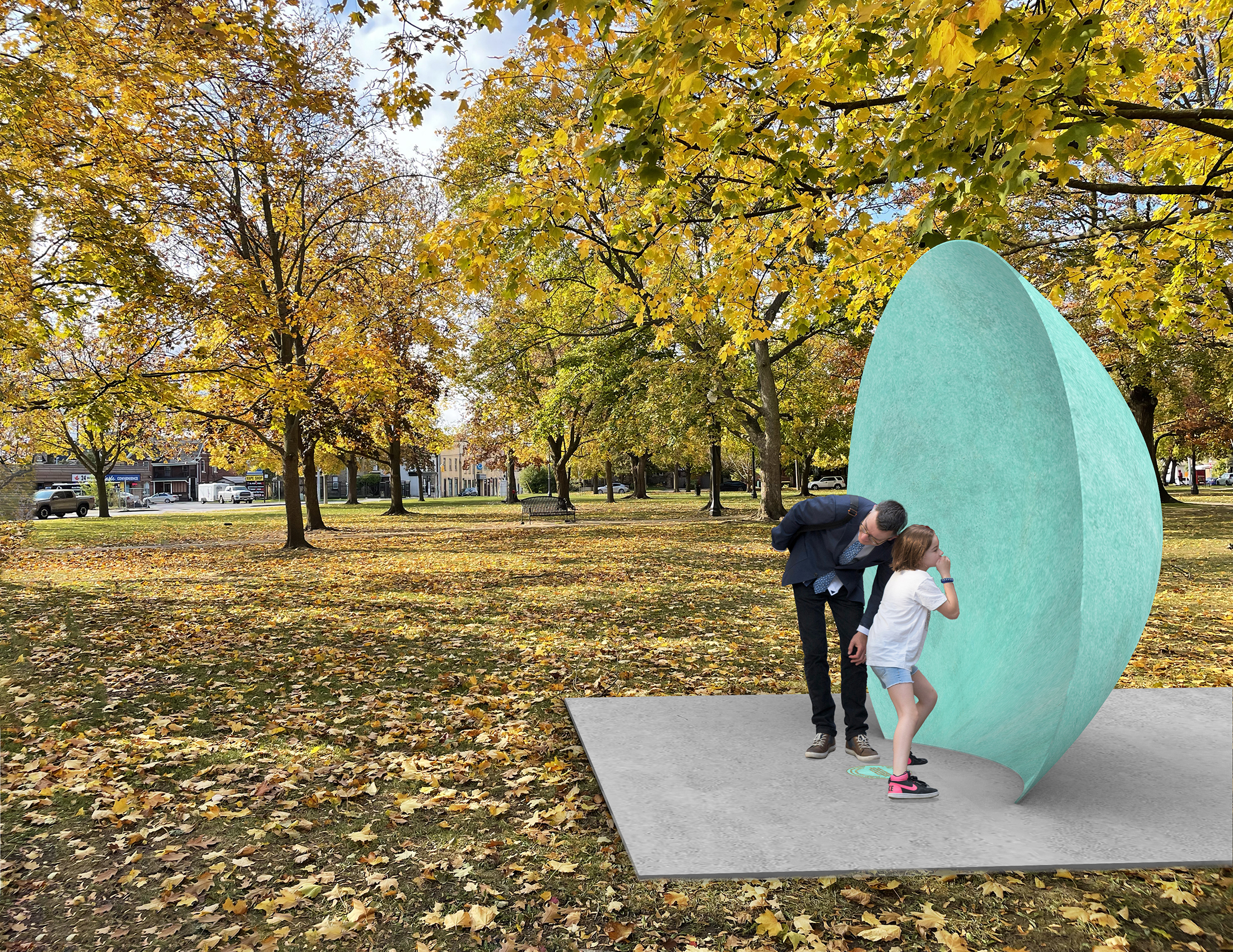
Imagine the early days of the telephone and what it was like to hear a voice clearly, from an impossible distance, for the first time – it must have felt like magic! To celebrate the 150th anniversary of the invention of the telephone in Brantford, we want people to experience something approaching the wonder of those early phone calls. We are inspired by Alexander Graham Bell’s legacy of experimentation and testing, and believe that to honour this, the public artwork needs to not only depict and celebrate but also to directly engage its audience. AHOY-HOY is composed of two monumental bronze discs facing each other across Alexandra Park. Using the discs, people can whisper to each other 50 meters away to communicate and experience the wonder of distant speech. The discs are specially shaped parabolic reflectors that let them receive sound waves over large distances. Plaques at each sculpture will explain the connection to Alexander Graham Bell and the invention of the telephone and prompt visitors to position themselves in front of one disc so they may communicate across the park with persons at the opposite one.
Review the Artist Statement for AHOY-HOY
Journey to the Centre of the Dial Tone by Caitlind r.c. Brown & Wayne Garrett
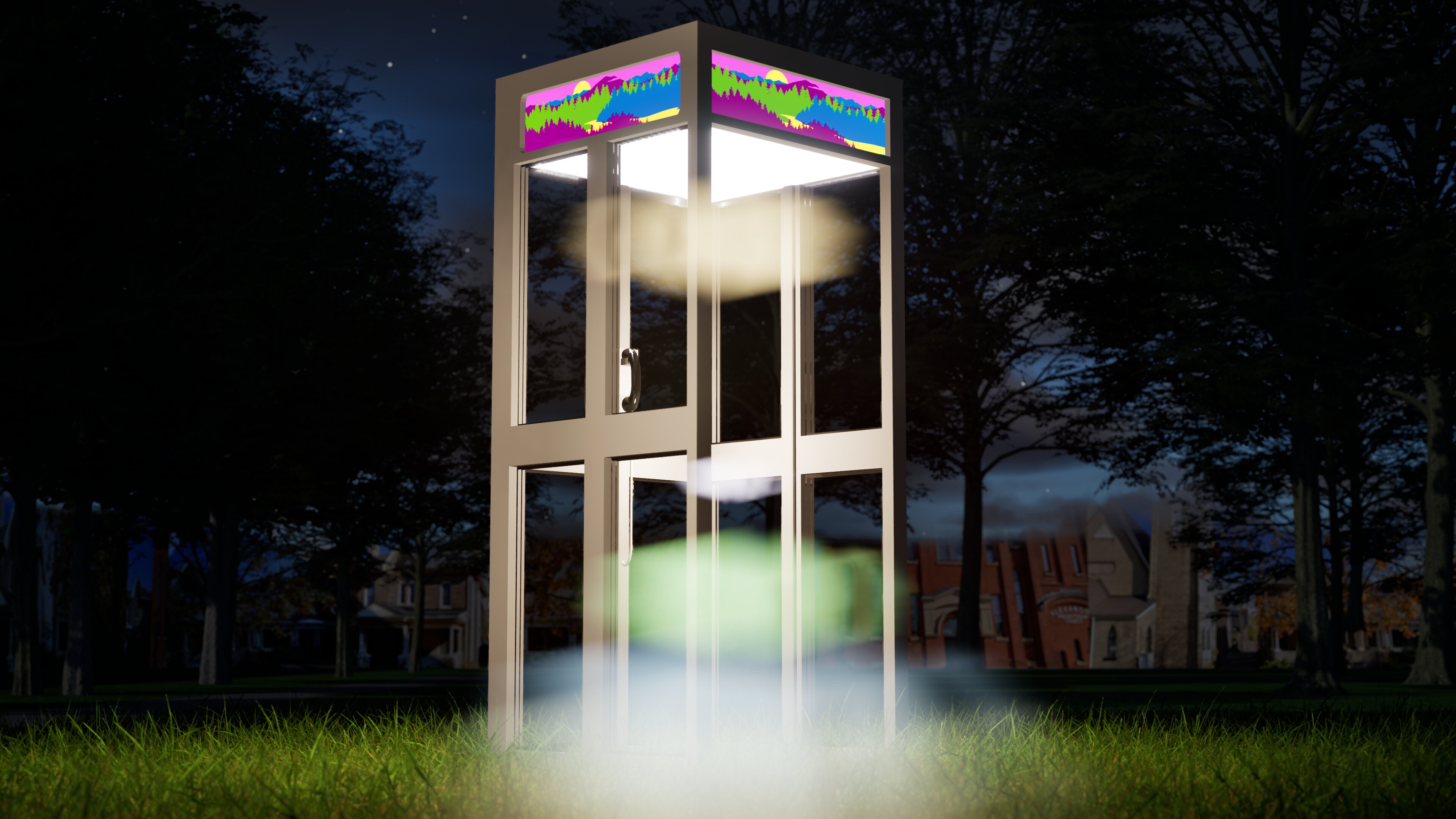
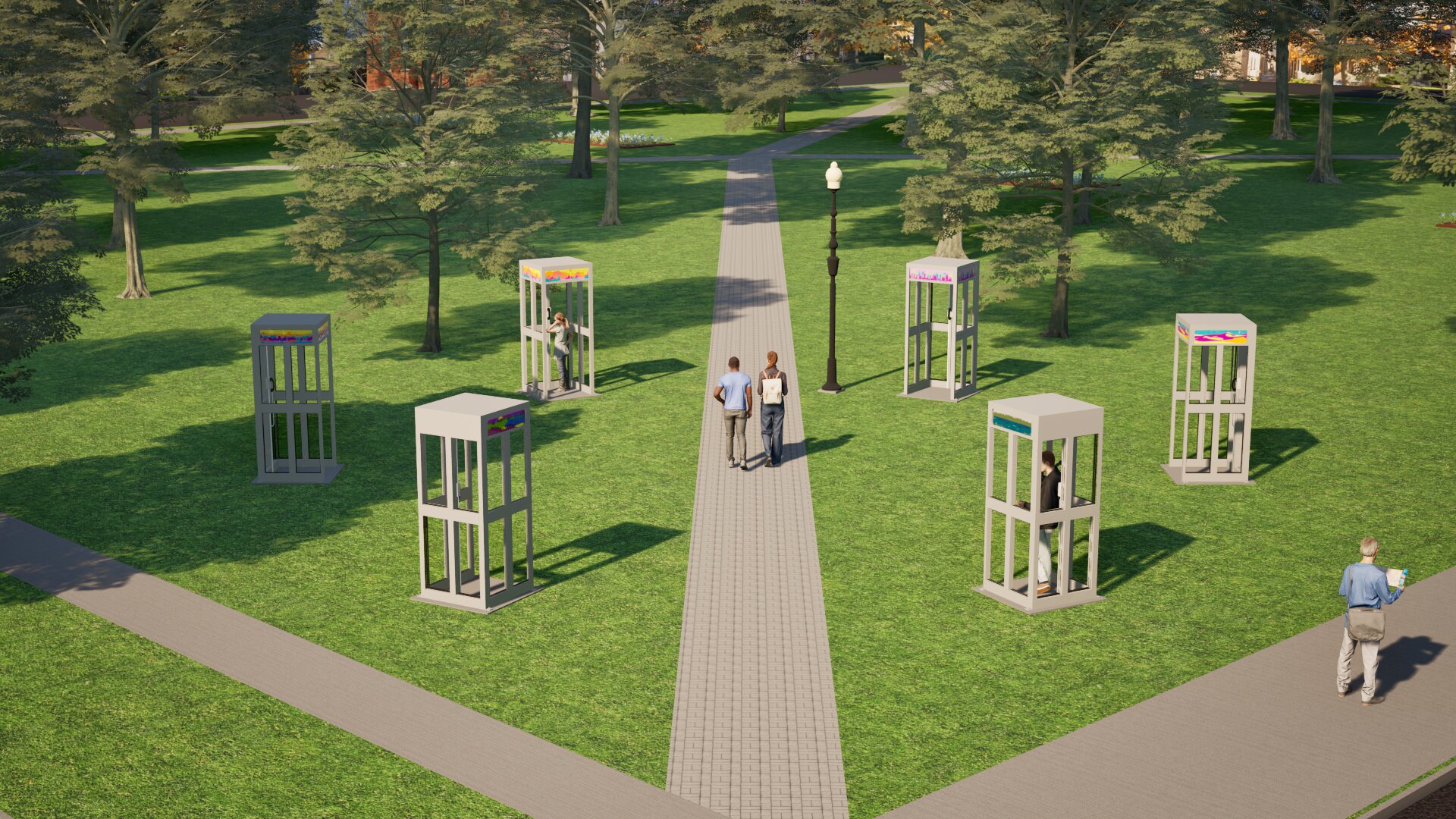
Journey to the Centre of the Dial Tone is an interactive art installation inviting a multi-sensory exploration of the relationship between Brantford, Ontario, and long-distance telephone calling. Imagine that first phone call, almost 150 years ago, between Brantford and Paris, Ontario. Suddenly, you could cast your voice across kilometers at the speed of electricity! Every assumption about the way people could communicate over distance was upended. Conversations could transcend geography, space, and cultural differences. A vast distance was compressed into a single point of almost instantaneous sonic connection. We imagine the first long-distance phone call felt like falling into a Jules Verne novel – a fantastic voyage through science fiction, all inside a brand-new handheld device invented by Alexander Graham Bell.
From the perspective of now (a time when smartphones have far outpaced even the most imaginative predictions of yesteryear’s science fiction writers), it’s difficult to imagine how impossible that first telephone call must have seemed. But what if we could create a new public artwork to help capture some element of that long-ago wonder? What if an interactive installation could remind Brantfordians of the world-changing invention conceived in their own backyard? What if we could forge new connections between people, inviting conversation across the “long distance” that separates strangers from friends? Journey to the Centre of the Dial Tone invites the communal reconsideration of Telephone City through a creative shift in perspective.
Review the Artist Statement for Journey to the Centre of the Dial Tone
Hello by Kyle Thornley
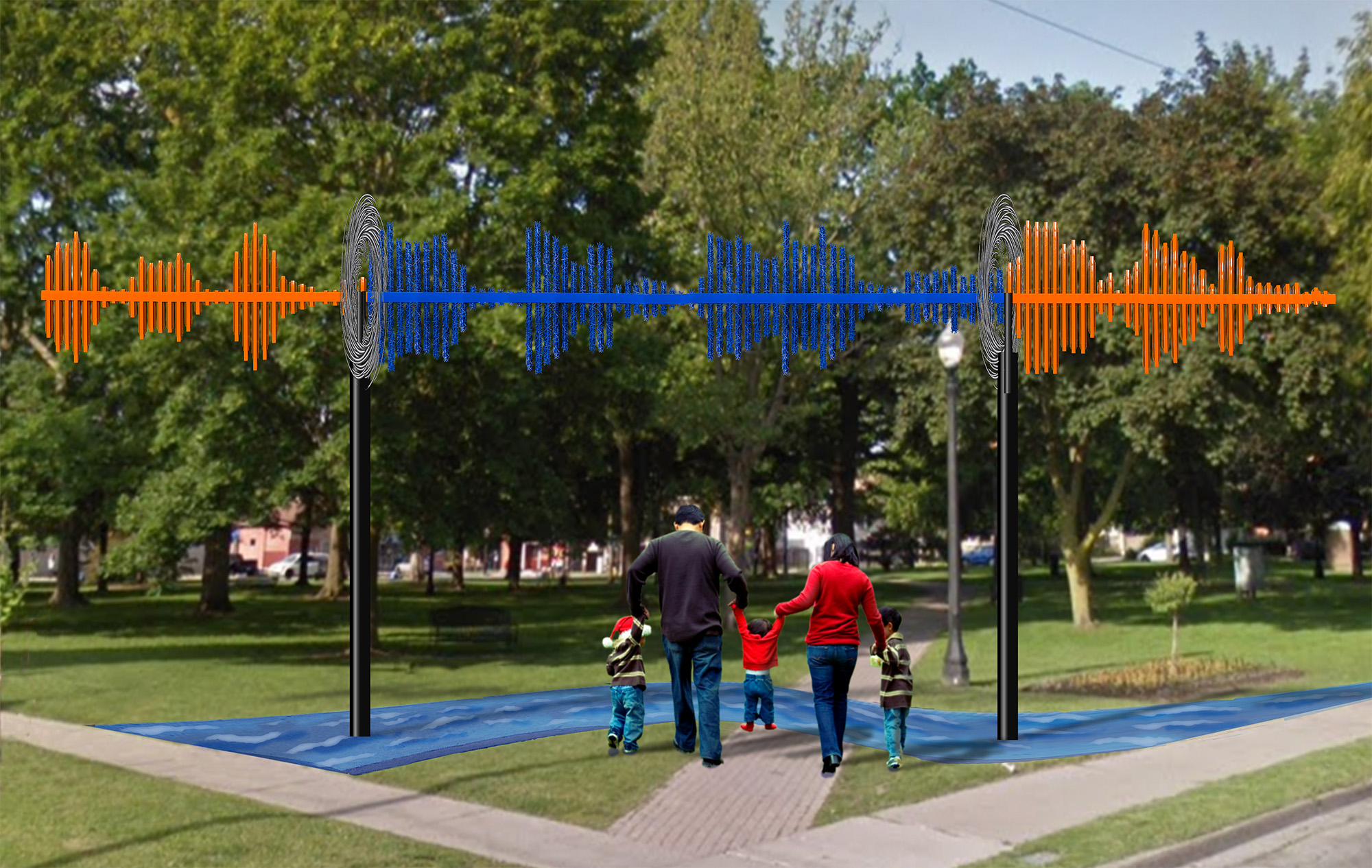
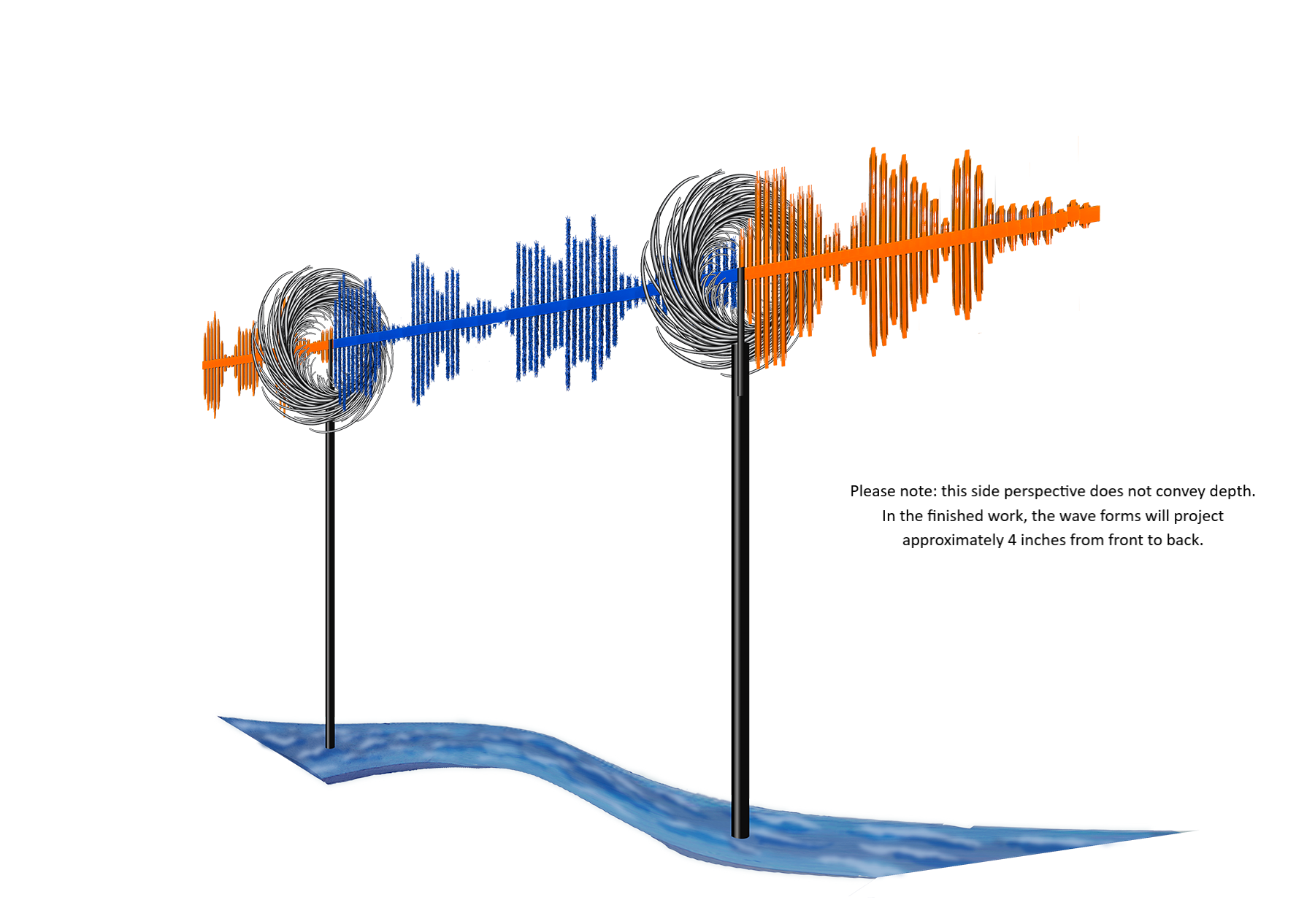
Hello celebrates a simple moment that changed the world: figuring out how to send the human voice through electricity. That single discovery made the telephone possible and laid the groundwork for the way we communicate today. It honours the very essence of Alexander Graham Bell’s invention 150 years ago. This sculptural visualization traces how a spoken hello becomes vibration, signal, and sound again. The different forms represent hello in multiple languages. A blue river base references the Grand River, where Bell found inspiration in nature, grounding the sculpture in Brantford’s identity as the birthplace of the telephone.
Hello captures the moment communication begins, transforming the invisible journey of the human voice into a physical experience. Most of us use phones every day without thinking about the basics of this exchange. Hello slows things down and makes that process visible - turning sound, signal, and connection into something you can walk beside, look at, and experience. At its heart is the word hello: the most basic way we reach out to one another. Ordinary, familiar, and yet powerful enough to change everything. So, what does a voice look like when you give it shape?
The sculpture unfolds as a long sound wave, showing how a telephone call works. At each end, bright orange waveforms represent the sound of a human voice - air vibrating as someone speaks. As that sound passes through a sculptural “portal” (like a microphone), sound transforms into an electrical signal. In the center, a blue waveform shows this signal travelling along a wire. Then, through a second portal (like a speaker), the signal turns back into sound - ready to be heard again. It’s one continuous line, never breaking - just changing form as it moves. The sculpture becomes a scientific explanation and a metaphor for human connection: voices reaching outward, bridging space, and linking local communities to a global world.
The waveforms themselves come from real recordings of people saying hello in multiple languages, including Haudenosaunee, to honour the original peoples and language of this territory and the enduring presence of Indigenous voices within the Grand River region. As you walk around the sculpture, the waves shift with your perspective, like voices moving through a conversation. Which ones do you recognize? Which ones spark curiosity?
Each sound wave is paired with a small nameplate beneath it, showing the written word hello, and the language it comes from - quiet invitations to notice both difference and common ground. Beneath the suspended sound waves runs a pigment-dyed blue concrete river. This element references the Grand River as a place where Bell spent time, drawing inspiration from nature.
It grounds the sculpture in Brantford - not just as the birthplace of the telephone, but as a place where ideas take root slowly. Hello reminds us that transformative ideas (like the telephone) often emerge gradually - beginning quietly, long before anyone realizes what they’ll become.
Review the Artist Statement for Hello
Share your thoughts
Residents are now invited to provide feedback on the three proposals using the form below. The final selected artist(s) will be determined through a combination of scoring criteria and deliberation by the Selection Panel.
Project Background
This new public art piece will honour and celebrate the life and legacy of Alexander Graham Bell, the invention of the telephone in Brantford, and the profound global impact of his invention. Unlike the existing monument dedicated to Bell, located in Bell Memorial Park, this new work will explore broader themes such as communication, the 150th anniversary, distance, interconnectedness, and more. Three shortlisted artists have been selected through an open, two-stage process facilitated by STEPS Public Art, a Canadian charity and social enterprise that fosters vibrant communities through public art, and have developed detailed proposals.
