FAQs
- Additional public engagement to inform the final restructuring agreement and both Councils’ consideration.
- Continued City and County discussions on a draft restructuring agreement.
- Consideration of the restructuring agreement by City Council and County Council.
- Statutory public hearings on July 27th (City of Brantford) and July 29th (County of Brant).
- Required by-laws and formal approvals.
- Any required provincial approval or restructuring order.
- City of Brantford Statutory Public Meeting: Monday, July 27, 2026 at 6:00 p.m., Council Chambers, Brantford City Hall, 58 Dalhousie Street, Brantford
- County of Brant Statutory Public Meeting: Wednesday, July 29, 2026 at 6:00 p.m., County of Brant Council Chambers, 7 Broadway Street West, Paris
What is the Memorandum of Understanding?
The Memorandum of Understanding, or MOU, is a document that outlines the proposed terms agreed to in principle between the City of Brantford and the County of Brant regarding a potential municipal boundary adjustment. The MOU does not, by itself, complete the boundary adjustment. It establishes the proposed framework for moving forward, including the lands proposed for transfer, compensation, transition matters, and next steps. A formal restructuring agreement and required approvals would still be needed before any boundary adjustment takes effect. It is noted that final approval to make a boundary adjustment, rests with the Province’s Minister of Municipal Affairs and Housing.
What lands are proposed to be transferred under the updated map?
The updated proposed transfer area now consists of 848 acres, reduced from the original 1,317 acres. The revised map removes 469 acres of agricultural land and also removes lands associated with a transportation corridor being explored as part of the City of Brantford's West Brant Access Route Environmental Assessment. The revised transfer area includes the Brantford Municipal Airport and a surrounding land area identified through the boundary adjustment review process, intended to accommodate the long-term planning, servicing, and development of the airport and aviation-related businesses. A map showing the updated proposed transfer area is available under the Documents section of this project page.
The map was updated in direct response to public feedback received through the Let's Talk Brantford engagement portal, the two public open houses held on June 11, 2026, and emails and calls received by both the City and County. Residents, landowners and community members consistently raised concerns about the protection of productive agricultural land and the natural environment. Both Councils carefully reviewed that feedback and agreed to revisions that reflect those concerns. The West Brant Access Route lands were also removed to ensure the boundary adjustment does not predetermine the outcome of an active and separate Environmental Assessment process.
Why is the boundary adjustment being considered?
The City of Brantford owns and operates the Brantford Municipal Airport, but the airport is currently located within the County of Brant. This creates challenges for long-term airport planning, governance, servicing, financing, and investment. The City is responsible for the long-term planning, maintenance, servicing, business activities, and operation of the airport. However, because the airport is outside the City’s municipal jurisdiction, the City’s ability to generate capital and implement long-term improvements is more challenging. The boundary adjustment is being considered to better align municipal jurisdiction with ownership and operational responsibility for the airport.
Why is the airport important to the Brantford area?
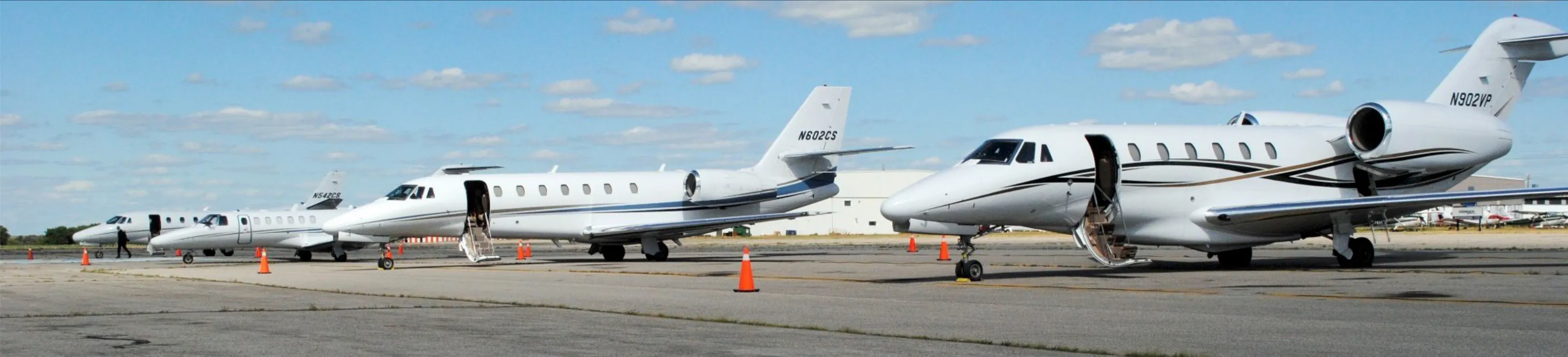
The Brantford Municipal Airport is a regional asset that supports private and corporate aviation, aircraft storage, parts and maintenance, flight training through the Brantford Flight Centre, charter service for the W. Ross McDonald School, Hope Air medical transport, logistics, filming, recreation, and aviation-related businesses. The City’s Economic Development Strategy identifies the airport as an important economic engine with significant development potential. The airport’s approved vision is to be recognized as a premier destination in Ontario for small private, corporate, and commercial aircraft services.
What is an aviation business park?
An aviation business park is a planned employment area focused on aviation-related and aviation-supporting businesses. The City’s Economic Development Strategy identifies the potential for an aviation business park at the Brantford Municipal Airport. It could include businesses such as aircraft maintenance, parts suppliers, paint shops, propeller and engine services, interiors, flight training, and other aviation-related services. The concept is intended to support local jobs, skilled labour attraction, regional supply chains, and long-term financial sustainability for the airport. It could also create related economic development opportunities in the County of Brant on adjacent employment lands.
Does this mean the airport is expanding immediately?
No. The signing of the MOU does not mean the airport is expanding immediately. The MOU sets out proposed terms for a boundary adjustment and provides a path for further discussion, public engagement, and formal Council consideration. Any future airport development, aviation business park development, servicing work, road changes, or land-use changes would be subject to the applicable planning, engineering, financial, environmental, and approval processes. Residents will be provided with more information as future plans are developed.
What happens to County residents in the proposed transfer area?
If the boundary adjustment is ultimately approved, properties within the transfer area would become part of the City of Brantford on the effective date established through the restructuring process. More detailed transition information would be provided to any impacted residents before any change takes effect. This would include information about municipal services, property taxes, by-laws, emergency services, waste collection, roads, water and wastewater, and customer service contacts. The City’s 2017 boundary-transition process used this same type of staggered service-by-service approach for affected residents, including transitional details on taxes, water billing, garbage and recycling, road maintenance, snow clearing, by-laws, licensing, and emergency services.
What happens to roads, water, and wastewater servicing?
Roads, water, wastewater, and related servicing matters would be addressed through the restructuring agreement and related agreements between the City and County. The MOU notes that boundary roads will be incorporated into the existing boundary road agreement between the City and County for routine maintenance and repairs. It also identifies additional matters related to planning, water and wastewater connections, and servicing arrangements.
As with previous boundary transitions, residents should not see any change in the level of service they receive from their municipality. The City will be communicating extensively with residents in the transfer area around City services, programs, and initiatives.
What approvals are still required?
The MOU is not the final approval. Additional steps are still required before any boundary adjustment can take effect. Next steps include:
How can residents ask questions or provide comments during the second phase of public engagement?
Residents can continue to ask questions and provide comments through this dedicated Let’s Talk Brantford project page and through in person public statutory meeting opportunities on July 27th and July 29th.
Questions and comments received through Let’s Talk Brantford and the statutory public meetings will help inform next steps.
When and where are the public statutory meetings?
Two statutory public meetings will be held as follows:
These are formal public proceedings where residents may provide comments directly to elected representatives.
What happens after the statutory public meetings?
Following the statutory public meetings, all feedback will be compiled and provided to both Councils. Both City and County Councils will consider whether to proceed with a final restructuring agreement. If both Councils agree to move forward, the proposed boundary adjustment would still require Provincial approval by the Minister of Municipal Affairs and Housing before taking effect. Any future land use, development, or planning decisions affecting these lands would be separate matters requiring their own individual processes, public consultation, and Council approvals.